
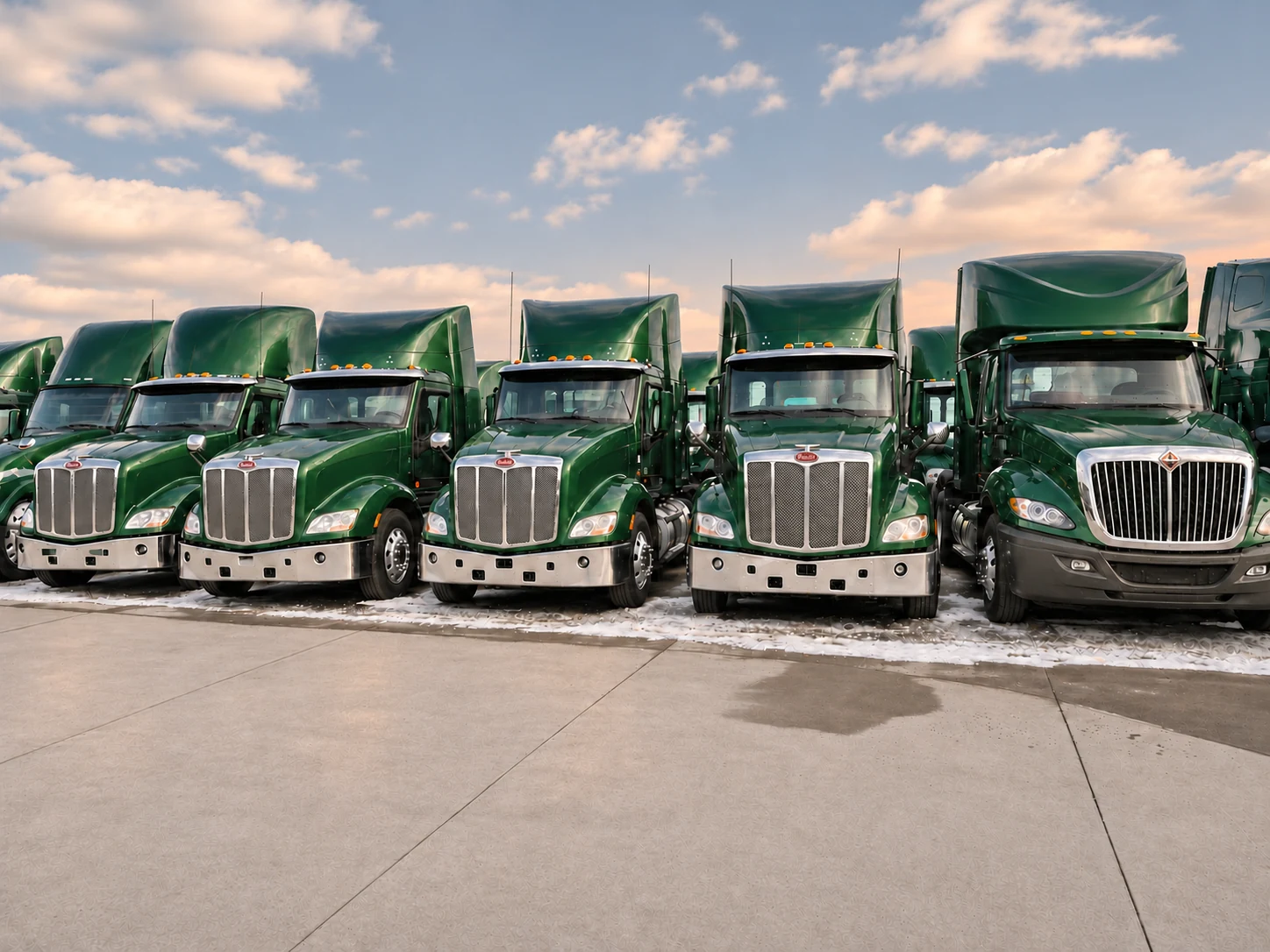
The move starts with the actual equipment.
A running tractor, a disabled work truck and a loaded trailer need different transport arrangements. We establish the condition, dimensions and loading requirements before arranging the move.
The plan identifies transportation and loading costs, who provides any required equipment, and what the site needs to have ready. Non-running units and unusual access requirements are worked through before pickup is scheduled.
Condition and dimensions
We check for starting and rolling condition, tire issues, missing components, unusual dimensions and attachments that need to travel with the unit.
Site access and loading
We work with the site contact on gate hours, yard rules, loading space and available assistance.
Release dates
We arrange collections around the units that are ready, the ones still working and any deadline for clearing the site.
One yard or several, with a plan for each pickup.
For fleets spread across several sites, we organize the move by location and unit ID. Each site contact has the pickup details for their equipment, including the collection window and any loading arrangements.
If availability changes, we work through the revised schedule with the site and transportation provider. Your team has a point of contact to resolve the change instead of passing messages between the buyer, driver and yard staff.
Know what is authorized to leave.
Pickup is tied to the sale terms and release authorization. We connect the unit list with the keys, records and attachments that belong in the handoff. Motor vehicle transaction and title paperwork are handled through Planet Auto Sales.
The pickup record identifies what left the site and notes any material difference in the units, condition or included equipment. That gives your team a clear record of the handoff.