
Plan around the units leaving service.
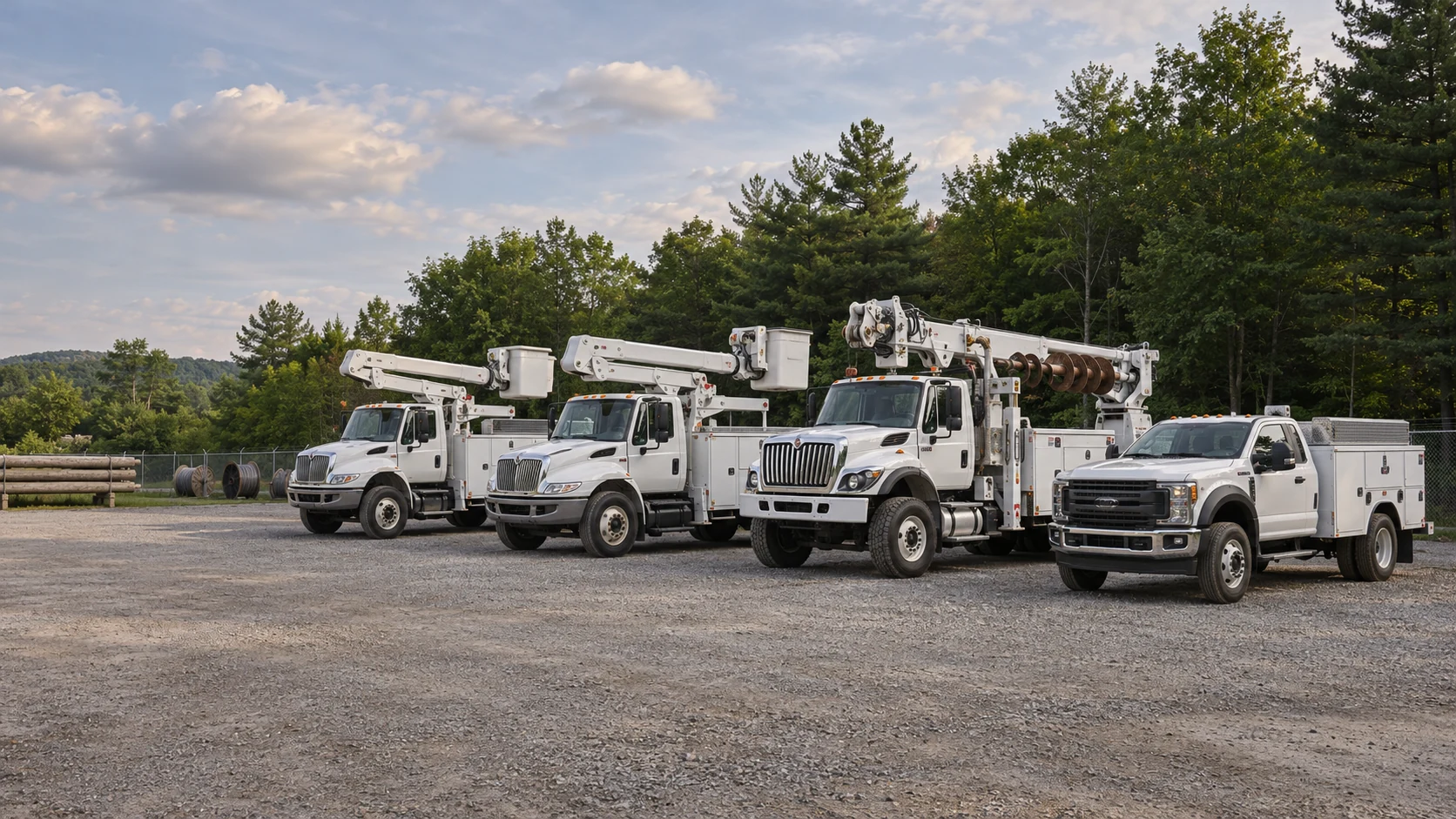
Send one unit or a retirement list spanning equipment types and locations. Bucket trucks, drills and diggers, service trucks, chassis and support equipment can have different conditions and release dates. Some may be parked now; others need to work until replacements arrive.
Tell us what must move together, what can sell separately and which internal approvals or disposal procedures apply. We can discuss a batch purchase, selected-unit acquisition or managed liquidation around those priorities.
Identify the truck and the installed equipment.
The chassis and the equipment mounted on it both matter. Record what will remain on each truck and what your team plans to remove before release. Provide available service and inspection records and identify known defects.
Bucket & Aerial Lift Trucks
Identify the chassis and aerial device separately, including the device manufacturer, model, serial number and available inspection or test records.
Drills & Diggers
Digger derrick trucks, pressure diggers and auger drill trucks. Include installed-equipment identification, attachments, known condition and the records available for that equipment.
Service Trucks & Utility Bodies
Describe the body, storage and installed equipment. State whether tools, cranes, compressors, welders and other contents are included.
Utility Chassis & Support Equipment
Cab-and-chassis units, reel and cable-placing trucks, reel and pole trailers, cable-handling equipment and other fleet support assets. Keep each asset and its included components identifiable.
Start with your existing fleet spreadsheet.
One row per asset is a useful starting point: unit ID, year, make, model, VIN or serial number, mileage or hours, location, known condition and intended release date. Add the body and installed-equipment identifiers where you have them.
Photographs of the complete unit, installed equipment, identification plates and known damage help us review the list. Include available maintenance summaries and ownership information. If records are incomplete, flag the gaps and name the person who can help resolve them.
Choose a purchase or a managed sale.
For a proposed direct purchase, the written offer identifies the covered assets, price, inspection conditions, payment and release requirements. The offer should make clear which units are included and which remain outside the proposal.
For managed liquidation, the agreement defines the marketing work, buyer inquiries, inspections, offer approvals, fees, payment handling and pickup responsibilities. A mixed approach may fit a retirement program, with selected units purchased and others handled under an agreed sales scope.
Coordinate pickup from your locations.
We coordinate collection planning for one yard or multiple sites. Share site contacts, access rules, operating condition, loading needs and release windows. If trucks leave service in stages, include that schedule with the list.
Confirm excluded tools and contents, any seller-required removal of company markings, hauling costs, loading assistance and payment or release requirements before collection. The plan should fit the assets that are actually ready to leave.
Send the list. We will work through the details.
Email sales@planetfleetsolutions.com with your organization, asset list, locations and target timing. You do not need a perfect spreadsheet to begin. Start with the information you have and identify anything still being confirmed.
If a body or aerial assembly will be removed before a chassis is sold, list it separately. We can review a separate sale scope for the body or assembly, with its components and available documentation identified.