
Keep the equipment types clear.
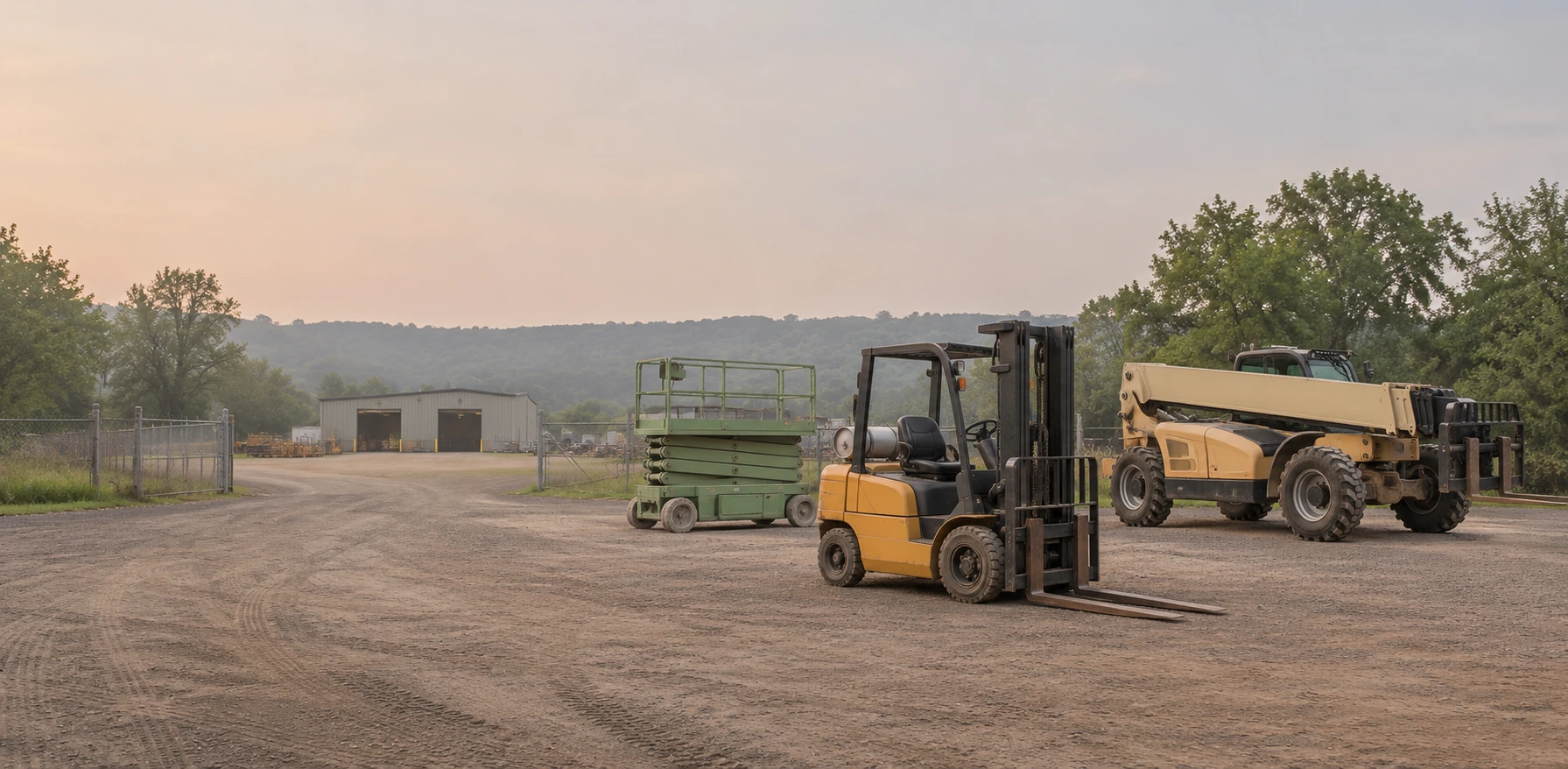
Forklifts and telehandlers handle loads in different ways. Boom lifts and scissor lifts are personnel access equipment. They can be reviewed together as a fleet group while keeping each machine's identity, application and records distinct.
Forklifts
Warehouse, industrial and rough-terrain forklifts. Include power type, rated capacity, mast or lift details, attachments and known condition.
Telehandlers
Fixed and rotating telehandlers, where applicable. Identify the model, available capacity information, lift height, reach and the forks or other attachments included.
Boom Lifts
Articulating and telescopic boom lifts. Record the machine identification, power type, recorded hours, available height specifications and known operating faults.
Scissor Lifts
Slab and rough-terrain scissor lifts. Include the machine identification, power source, available specifications, recorded hours and known condition.
List the machine, attachments and records.
Use one row per machine with the asset ID, manufacturer, model, serial number, recorded hours, location and release date. Keep attachments, chargers, batteries and accessories tied to the correct unit and state whether they are included.
Provide available maintenance and inspection records, photographs and known defects. Identify equipment that has not been operated or inspected recently. Any inspection or certification description should match the actual document, unit, date and scope; a category label is not a statement of readiness.
Review the sale route for the group.
A proposed direct purchase identifies the machines, included equipment, inspection conditions, price and release terms. A managed sale defines marketing, buyer approvals, fees and the responsibilities of the parties. We review the options against the equipment and your required timing.
Tell us whether the group must sell together, whether machines remain in use and whether the equipment is spread across facilities or jobsites. Ownership and any financing release requirements should be identified early.
Plan removal from the current location.
We coordinate inspection and pickup planning around access, operating condition and loading needs. Share site hours, the pickup contact, doorway or ground constraints and any assistance available.
Transport method, costs, loading responsibilities and release timing should be confirmed before collection. Do not assume a machine can load itself because a similar unit can.