
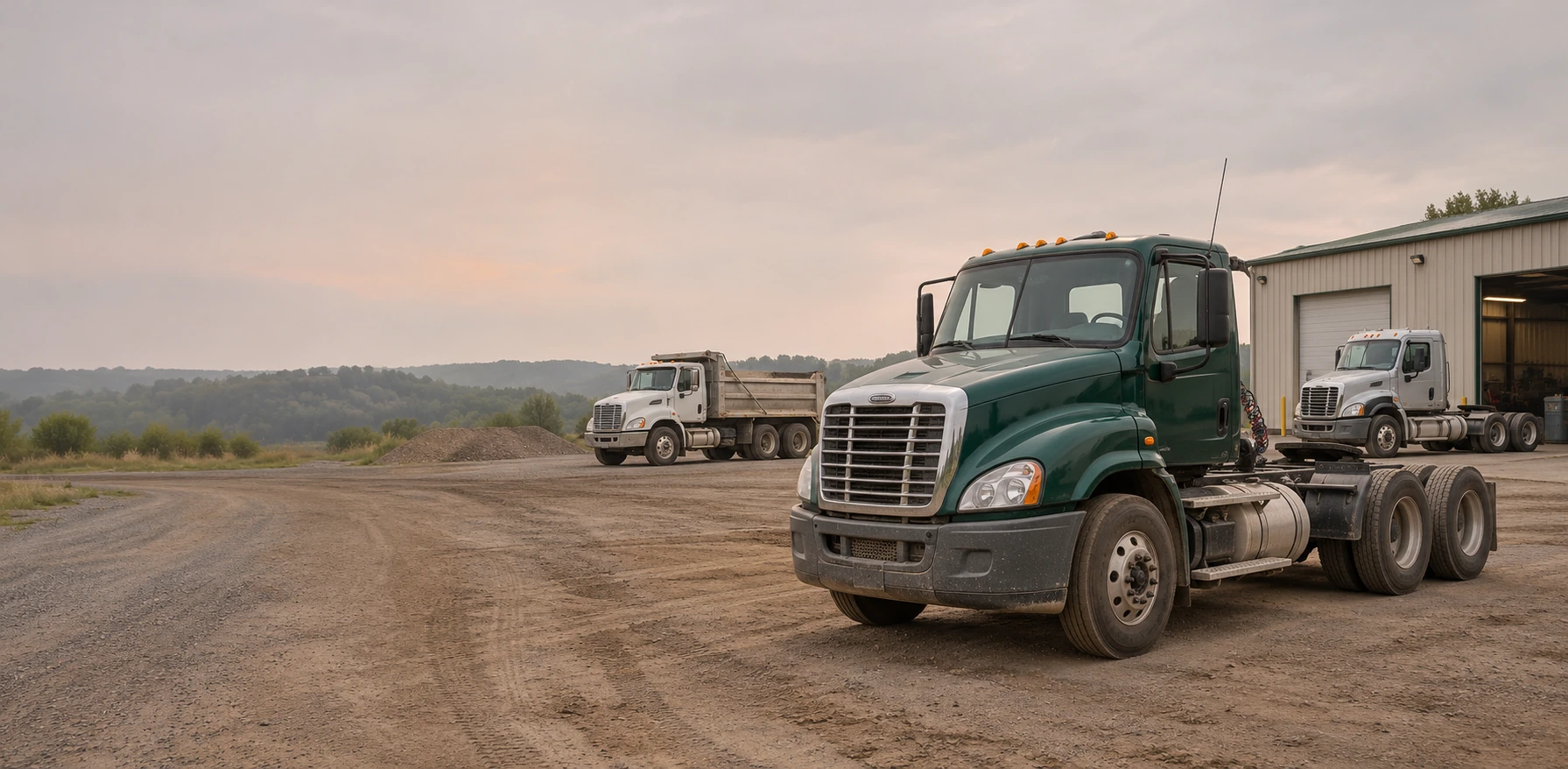
One truck category. Several kinds of work.
Commercial trucks include road tractors, delivery vehicles, work trucks and specialized utility units. A mixed fleet can come through one conversation, with the details recorded for each truck.
Semi Trucks
Day cabs and sleeper tractors, including groups leaving a fleet at different dates. Identify the configuration, mileage, operating condition and maintenance records available.
Work & Delivery Trucks
Dump trucks, mechanics and service trucks, flatbeds, box trucks, refrigerated trucks and commercial vans. Record the body and equipment as well as the chassis.
Utility Trucks
Bucket trucks, drills and diggers, crane and boom trucks, vacuum and hydro excavation trucks, and reel or cable-placing trucks. Identify each installed device and the available equipment records.
Cab & Chassis
Vehicles offered as chassis, including trucks with bodies or equipment removed before release. Specify the included components and known condition.
Start with the fleet list you already use.
An existing spreadsheet is enough to open the conversation. Include unit IDs, year, make, model, VIN, mileage, current location and the planned release date. Add body or equipment details, photographs and known defects where available.
Tell us whether the group must sell together, whether selected units can be considered and whether internal approvals or replacement deliveries affect the timing.
Compare the purchase, the timing and the pickup.
Where a direct purchase is proposed, the written offer identifies the units, price, inspection conditions, payment and release requirements. Managed liquidation uses a separate written scope covering marketing, offers, fees and seller approvals.
We coordinate inspections and pickup with the relevant site contacts. Confirm transport costs, loading arrangements and release responsibilities before the trucks move. If you are comparing a sale with a dealer trade-in, compare the complete written terms as well as the unit price.