
Build the list around the actual trailers.
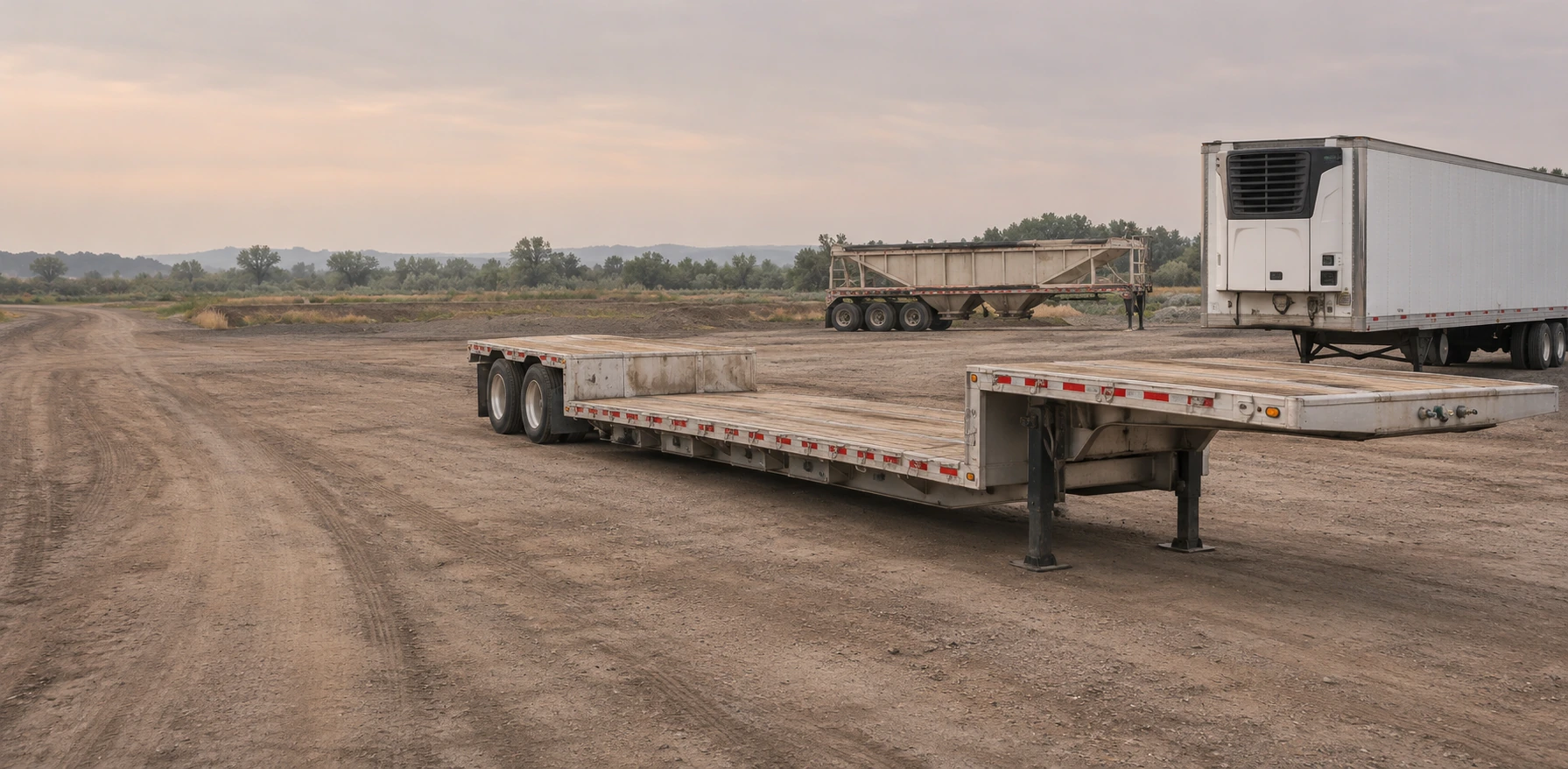
We review dry vans, refrigerated trailers, flatbeds, step decks, lowboys, equipment trailers, dump trailers and specialty configurations. Utility fleet inquiries can include reel trailers and pole trailers. Record each trailer's identification and location, then add the specifications and condition details that distinguish it from the rest of the fleet.
Dimensions and configuration
Include year, make, model, length, width, axle arrangement, suspension and rated capacity information available in the records.
Body and systems
Describe flooring, doors, roof, landing gear, brakes and tires. For specialized equipment, include refrigeration or hydraulic system details and known faults.
Availability and records
List title or ownership information, current locations and release dates. Note any trailers still loaded or committed to active work.
Agree what can be sold as a group.
A batch can include similar trailers with different mileage histories, repairs or condition. Keep those differences tied to unit IDs. We review the proposed group before discussing a direct purchase or a managed-sale scope.
Written terms should identify the covered trailers, included equipment, conditions and transportation responsibilities. If some trailers will be released later, that schedule should be addressed rather than assumed to match the first pickup.
For belly dump and pup trailer sets, identify each trailer separately and state whether the matched set must sell together. A count of sets should remain distinct from the number of individual trailers.
Confirm readiness before transportation.
You can begin review without moving the trailers. We coordinate the inspection and release details with the appropriate yard contacts. State whether trailers can be accessed and coupled, and flag damage or other conditions that may affect movement. For tanks or specialized cargo equipment, disclose prior use and available cleaning or maintenance records.